Deemed Receipt, Explained Plainly
No system can wait to discover when somebody actually opened an envelope, so the question is decided in advance instead. Deemed receipt is that decision, written into the rules, and every single deadline downstream is counted from the day it produces.

The rule in short
Deemed receipt is a rule fixing the day on which a document is treated as having reached its recipient, whatever happened in reality. It exists to make timetables calculable, it varies by method and by system, and it can usually be displaced only by evidence meeting a defined standard. Knowing the applicable provision converts a dispatch date into a diary entry.
Almost every deadline in a matter is counted from receipt, and almost nobody knows when receipt actually happened. Deemed receipt is how systems resolve that, and it is a rule rather than a finding.
What the rule does
It fixes a day. The document is treated as received on a stated day, and every following period is counted from it.
It applies whatever happened. Earlier reading, later collection and complete ignorance make no difference to the calculation.
It varies by method. Post, personal delivery, email and portal each attract their own provision in most systems.
It usually counts business days. Weekends and closures are commonly excluded, per weekends, holidays and closures.
It frequently has a cut-off hour. Documents delivered after a stated time are treated as received the following day.
It is not a finding of fact. The rule does not assert that receipt occurred; it decides how time will be counted.
It creates certainty for both sides. Sender and recipient can calculate the same dates from the same information.
It is displaceable, sometimes. Many systems permit evidence that the document was not received at all, or was received considerably later.
It applies to both sides. The same provision governs when a document served by a party is treated as received by their opponent, which means the calculation matters equally to whoever is counting.
How it differs by method
Personal delivery. Usually receipt on the day, subject to any cut-off hour applying to late delivery.
Ordinary post. Commonly a stated number of business days after posting, which is the most familiar version.
Tracked or certified mail. Sometimes the delivery date, sometimes the same deemed period as ordinary post.
Email. Frequently the day of sending, subject to a cut-off, per service by email and by portal.
Portal. Often the day the document becomes available rather than the day the alert is sent.
Courier. May or may not be treated as post, and the applicable provision needs checking.
Service abroad. Different and usually longer, tied to the certificate from the receiving authority.
Under a contract. Notice clauses set their own deemed receipt provisions, which override the general default position as between the parties to that agreement.
Under a specific statutory regime. Particular subject areas frequently carry their own timing provisions that displace the general procedural rule entirely, and those are easy to overlook when the general rule is familiar.
| Method | Typical deemed receipt | Watch for |
|---|---|---|
| Personal delivery | Same day | Cut-off hour |
| Ordinary post | Stated business days later | Closures |
| Day of sending | Cut-off and time zone | |
| Portal | Availability date | Notification is separate |
| Contractual notice | As the clause says | Overrides the default |
Why it exists
Timetables need fixed points. A system counting from actual receipt could not schedule anything reliably.
Senders cannot control delivery. Once a document is properly dispatched, what happens next is outside their influence.
It removes an evidential inquiry. Otherwise every deadline would require proof of when somebody opened something.
It discourages avoidance. A recipient cannot delay a period by declining to collect mail.
It matches the obligation to maintain records. Recipients are expected to monitor their nominated address or channel.
It allows both parties to calculate. Which prevents disputes about dates that have nothing to do with the merits.
It is balanced by additional time. Methods with delivery delay frequently attract extra days for the recipient.
And by displacement provisions. Genuine non-receipt is dealt with separately, per rebutting the presumption of receipt.
It reflects an allocation of risk. Delivery failures fall on the party better placed to prevent them, which is usually the recipient who chose and maintains the address or account.
Its only purpose is producing the date something must be done by. A deemed receipt calculated and then not converted into a diary entry has done no work at all.
Working with it
Identify the method first. Everything else follows from which provision applies.
Read the provision rather than recalling it. Deemed receipt rules differ between systems more than almost anything else.
Note the cut-off hour. Late delivery frequently moves the deemed date by a day, which moves everything after it.
Apply the business-day adjustment. A deemed date landing on a closure usually rolls forward.
Calculate the following deadline immediately. The deemed date is an input, not an output, and its value is the diary entry it produces.
Record how it was calculated. So that somebody else can check the arithmetic without redoing it.
Check whether extra time applies. Some methods add days for the recipient and others expressly do not.
Do not rely on actual receipt. A document opened early starts nothing early, and one opened late delays nothing either.
Diarize the underlying dispatch date too. Where a deemed date is later challenged, the dispatch record is what supports it, and keeping both together makes the calculation reproducible months afterwards.
Common errors
Counting from dispatch. Where the rule counts from a deemed date several days later, or the reverse.
Ignoring the cut-off. An item delivered at six in the evening may count as the next day.
Using the wrong method's rule. Courier treated as post, or portal treated as email.
Missing the business-day adjustment. Which produces a date one or two days out and can be decisive.
Double-counting additional time. Applying both a deemed receipt period and an extra-days provision where only one applies.
Assuming the contract follows the rules. Notice clauses frequently say something different, and they govern between the parties.
Forgetting time zones. For electronic service across zones, per time zones and a national deadline.
Never writing it down. A calculation that nobody recorded is a calculation that nobody else can check.
Recalculating from a moved date. Where a hearing or a step is relisted, every deemed date counted from it changes as well, and refreshing one entry while leaving the others is how a diary quietly goes wrong.
Deemed receipt is a rule fixing the day a document is treated as reaching its recipient, adopted because a system counting from actual receipt could not schedule anything.
It varies by method, commonly counts business days, frequently carries a cut-off hour, and is displaced only by evidence meeting a defined standard rather than by assertion.
It exists to give both sides the same calculable dates, and it is balanced by provisions adding time for slower methods and by mechanisms addressing genuine non-receipt.
Working with it means identifying the method, reading the provision rather than recalling it, applying the cut-off and the business-day adjustment, and converting the result into a diary entry immediately.
The recurring errors are counting from the wrong event, ignoring the cut-off, applying another method's rule, double-counting additional time, and assuming a contract follows the default position when it does not.
Points to carry away
- The rule fixes a day regardless of actual events.
- It differs by method of service.
- Business days and closures usually adjust it.
- Actual earlier receipt rarely accelerates anything.
- Displacing it requires evidence, not assertion.
Questions readers ask
What does deemed receipt actually mean?
It means the rules have decided in advance which day a document counts as having reached its recipient, so that every subsequent deadline can be calculated without anybody investigating when it was opened. The day varies by method: same day for personal delivery, a stated number of business days after posting for mail, the day of sending or availability for electronic service. It is a counting rule rather than a finding about what happened.
Does it help to prove a document was received earlier or later than the deemed date?
Earlier receipt almost never helps, because the rule fixes the date and nothing accelerates it. Later receipt, or non-receipt, is a different matter: many systems permit the presumption to be displaced by evidence meeting a defined standard, though the burden sits with the recipient and general assertions of not having seen something are rarely enough. Where a document genuinely never arrived, that is the argument to make, promptly and with supporting material.
Do contractual notice clauses follow the same rules?
Not necessarily, and where they differ the clause governs between the parties. Notice provisions frequently set their own deemed receipt periods, nominate specific addresses, and specify methods that would not be permitted under general procedural rules. That makes reading the clause essential before calculating anything, because applying the default position to a contractual notice is a common way of producing a date that is several days wrong in either direction.
Sources
- Federal Rules of Civil Procedure — Rule 5(b)(2), Service in Generallaw.cornell.edu
- Federal Rules of Civil Procedure — Rule 6(a), Computing Timelaw.cornell.edu
- Federal Rules of Civil Procedure — Rule 6(d), Additional Timelaw.cornell.edu
- Legal Information Institute — Mailbox Rulelaw.cornell.edu
- Federal Rules of Appellate Procedure — Rule 26, Computing and Extending Timelaw.cornell.edu
- Legal Information Institute — Presumptionlaw.cornell.edu
Urban Justice Docket is a publication, not a law firm. This article states general rules and cites its sources; it is not advice about any particular case, and the law differs by state and changes over time.
More in Receiving Notice

Refusing to Accept a Document
A recipient who declines to take a document is generally treated as having been served, provided the server identified them and brought the document to them. Refusal also produces a contemporaneous record describing exactly what happened, which is unhelpful later, and it removes any argument that the recipient did not know a matter existed.
Returned Mail, and What It Proves
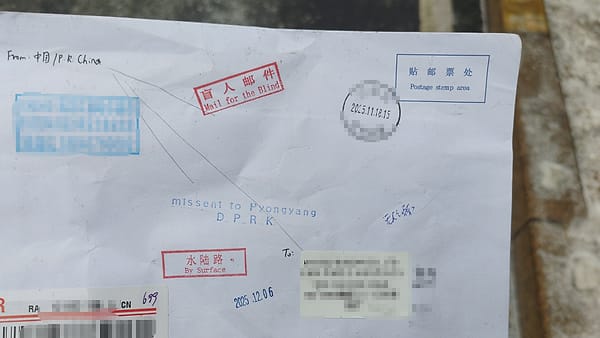
Returned mail proves that delivery did not occur and indicates why, and the reason is the useful part. Unknown at the address, refused, unclaimed, vacant and insufficient address each point at different conclusions about whether the record is stale, whether the recipient is avoiding contact, and what the sender should do next.
Notice to a Representative Rather Than a Party
Where a representative is on record, service on them is generally service on the party, and the party is bound by it. That arrangement works well until it breaks: a withdrawal never filed, a handover between advisers, a firm that closed, or a representative who never passed the document on. The record is what governs, and keeping it accurate is the whole of the protection.