Courier, Fax and After-Hours Filing
Electronic filing has not abolished the drop box, the courier or, in a few remaining places, the fax machine. Those routes survive precisely because systems fail, and using any of them correctly requires knowing its conditions well in advance.
The rule in short
Alternative filing routes remain available in many systems: after-hours drop boxes, courier delivery, counter filing and occasionally fax. Each carries conditions about timing, proof and follow-up, and each is most likely to be needed on an evening when there is no time to research it. Establishing what is permitted in advance is the practical value of knowing about them at all.
Older filing routes persist quietly, and they are needed precisely when nobody has time to find out how they work. Ten minutes of preparation makes them usable.
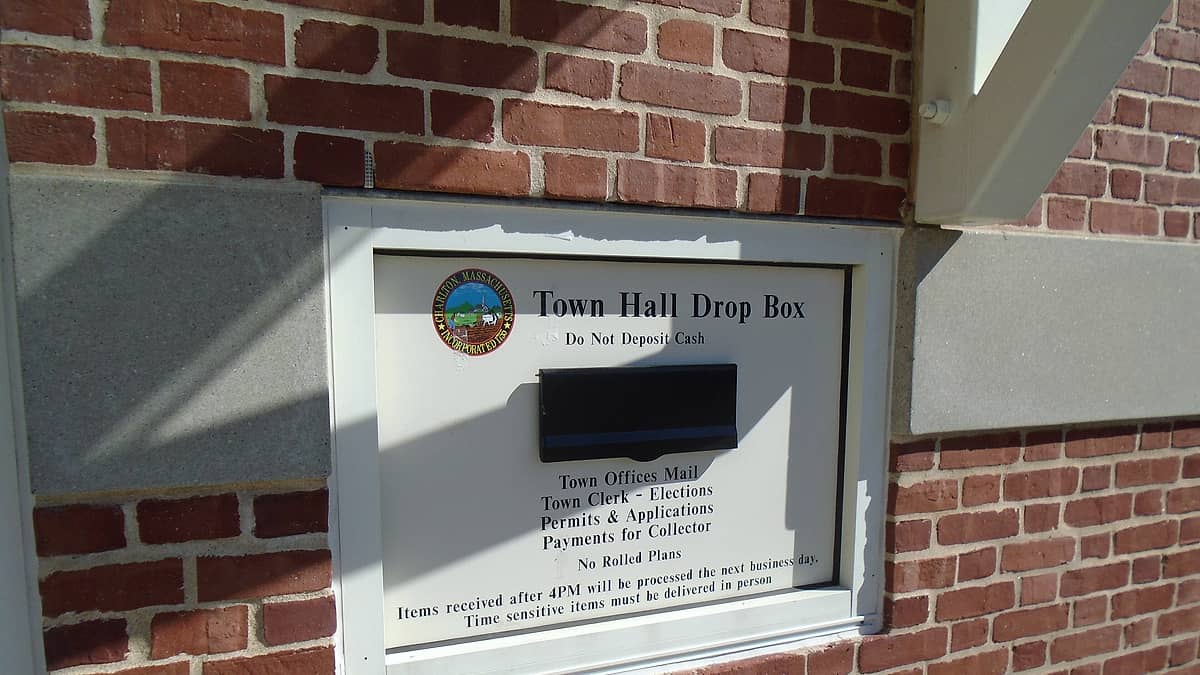
After-hours drop boxes
They exist in many places. A secured box accepting documents outside opening hours, emptied at a stated time the following morning.
The cut-off is defined. Documents deposited before a stated hour count as filed that day, and later deposits count as the next.
Time-stamping varies. Some boxes stamp on deposit, others when emptied, which is the difference between filing on time and not.
The document must be complete. Cover sheets, copies and fee arrangements are all required exactly as at a counter.
Fees are a complication. Payment cannot usually be taken from a box, and the arrangement for it needs establishing in advance.
Proof is thinner. Nobody hands back a receipt, which makes photographing the deposit worth doing.
Access can be restricted. Building security outside hours is a practical obstacle that surprises people at nine in the evening.
Confirm the filing appeared. On the following day, because a deposit nobody processed is a filing that never happened.
Copies matter. Where a system requires a specific number of copies, a deposit short of that number is frequently returned rather than processed, and nobody is there to point it out.
Courier and hand delivery
Filing occurs on arrival. The courier's collection time is irrelevant, and a document collected at four and delivered at ten is filed the following day.
Delivery must be to the right place. Large buildings have multiple receiving points, and delivery to the wrong one is not filing, per filing in the wrong place.
Signature records help. A delivery signature with a time is useful proof, provided it records receipt by the correct office.
Opening hours govern. A courier arriving after the counter closes has not filed anything that day.
Fees still apply. Payment arrangements have to accompany the delivery in whatever form is accepted.
Instructions matter. Couriers deliver where told, and vague instructions produce documents in mailrooms.
Track it actively. Somebody should confirm delivery rather than assuming the service worked.
It is slower than it looks. Same-day delivery within a single city still consumes hours that a deadline evening does not have.
Weather and traffic are the filer's risk. A courier delayed by conditions has not created an excuse, which is why the margin has to be built into the plan rather than hoped for.
| Route | Filed when | Main condition |
|---|---|---|
| Drop box | On deposit or emptying | Check which |
| Courier | On delivery | Correct receiving point |
| Counter | On acceptance | Opening hours |
| Fax | On transmission | Follow-up required |
| Electronic | On submission | System availability |
Fax and other legacy routes
Fax filing survives in places. Some forums and agencies still accept it, usually for defined document types and with a length limit.
Conditions are strict. Cover sheets, page limits and follow-up requirements are typical and are enforced.
Transmission reports are the proof. The report showing successful transmission with a time is the record, and it should be retained.
Partial transmissions fail. A document that transmits incompletely is generally not filed, and the report shows it.
Follow-up filing is common. Many regimes require the original to be filed within a stated period afterwards.
Email filing exists occasionally. Some bodies accept submissions by email under defined conditions, which is a different route with different rules.
Do not assume availability. Legacy routes are withdrawn quietly and the discovery is made at the worst moment.
Check the current position. A published list of accepted methods usually exists, and it takes minutes to read.
Retain the original. Legacy routes almost always contemplate the original document following afterwards, and discarding it once transmitted creates a problem two weeks later.
Every one of these methods is used by somebody with an hour left and no information. A single page recording which methods the relevant forums accept, and what their cut-offs are, is worth preparing on an ordinary afternoon.
What all of them require
Knowing the conditions in advance. None of these routes rewards improvisation on the evening they are needed.
A complete document. Alternative routes do not relax formal requirements, per a filing rejected for a formal defect.
An arrangement for fees. Payment is the component most likely to derail an alternative filing.
Proof captured at the time. Photographs, delivery records, transmission reports, retained immediately.
Follow-up confirmation. Checking the next day that the filing appears on the record.
Service dealt with separately. Filing by an alternative route does nothing about serving the other parties.
A note explaining the route. Where an unusual method was used, a short covering explanation helps whoever processes it.
Awareness of the cut-off. Which differs from the electronic cut-off, per the last day and what time it ends.
When to use them
During a system outage. The most common situation, and frequently the route the rules themselves direct people to.
Where electronic filing is unavailable to the filer. Unrepresented parties and occasional filers are sometimes outside the electronic system.
For document types the system will not accept. Oversized exhibits, physical items and unusual formats.
Where the system rejects a submission late. An alternative route may salvage the day when a rejection arrives at eight in the evening.
Where sealed or restricted filing is required. Some categories are handled physically by design.
As a deliberate backup. Knowing that the route exists changes how calmly a deadline evening gets handled.
Where a physical original is required. Documents that must be produced in original form, such as certain sworn or apostilled material, cannot be filed electronically at all.
Not as a routine substitute. Electronic filing is faster, better evidenced and less likely to go wrong.
Not without checking first. Availability changes over time, and the assumption that a route still exists is itself the risk.
Not where the electronic route is mandatory. Some systems require electronic filing and treat an alternative as irregular unless an outage or an exemption justifies it, which is worth confirming.
Alternative filing routes survive alongside electronic systems, and they exist precisely for the evenings when the electronic route has failed.
After-hours drop boxes have their own cut-off and may stamp on deposit or on emptying, which is the difference between filing on time and filing the next day.
Courier delivery is filing on arrival rather than on collection, must reach the correct receiving point, and is governed by the counter's opening hours.
Fax filing persists in limited contexts with strict conditions, transmission reports as proof and a follow-up filing requirement in most regimes.
All of them require the conditions to be known in advance, a complete document, an arrangement for fees, proof captured at the time and confirmation the following day.
Points to carry away
- Drop boxes and counters have their own cut-off rules.
- Courier delivery is filing on arrival, not on collection.
- Fax filing survives in limited contexts with conditions.
- Alternative routes usually require follow-up filing.
- Establish availability before the evening it is needed.
Questions readers ask
Is a document filed when a courier collects it or when it is delivered?
On delivery, and to the correct receiving point. The collection time is irrelevant, which means a document collected in the afternoon and delivered after the counter closes has not been filed that day. Large buildings frequently have several receiving points, and delivery to a general mailroom rather than the correct office may not count either. Precise delivery instructions and active tracking are what make the route reliable.
Do after-hours drop boxes stamp documents with the deposit time?
It varies, and the variation matters a great deal. Some boxes are configured so that deposits before a stated hour are treated as filed that day, others are simply emptied the following morning and stamped then. Establishing which arrangement applies is essential before relying on the route, and photographing the deposit with a visible time is worth doing in either case, since no receipt is issued.
Is fax filing still accepted anywhere?
In some forums and agencies, for defined document types, usually with page limits, cover sheet requirements and an obligation to file the original within a stated period afterwards. The transmission report showing a successful send with a time is the proof and should be retained. Because legacy routes are withdrawn without much publicity, availability should be confirmed against the current published list rather than assumed from previous practice.
Sources
- Federal Rules of Civil Procedure — Rule 5(d)(2), How Filing Is Madelaw.cornell.edu
- Federal Rules of Civil Procedure — Rule 6(a)(3), Inaccessibility of the Clerk's Officelaw.cornell.edu
- Federal Rules of Appellate Procedure — Rule 25(a), Filinglaw.cornell.edu
- Federal Rules of Civil Procedure — Rule 77(a), When Court Is Openlaw.cornell.edu
- United States Courts — Court Website Linksuscourts.gov
- Legal Information Institute — Filinglaw.cornell.edu
Urban Justice Docket is a publication, not a law firm. This article states general rules and cites its sources; it is not advice about any particular case, and the law differs by state and changes over time.
More in Filing, and When It Counts
System Outages on the Last Day
Most electronic filing regimes provide for extensions or alternative routes where the system is unavailable. Obtaining that relief requires contemporaneous evidence: timestamps of attempts, error messages, screenshots and any official outage notice. It also requires distinguishing a system failure, which usually attracts relief, from a problem at the filer's own end, which usually does not.
A Fee That Blocks a Filing
Many filings require a fee, and where payment is a condition of acceptance a failed transaction prevents the filing entirely. Fee waivers and deferrals exist, take time to obtain, and have their own evidential requirements. The practical protection is arranging payment before the deadline evening and applying for any waiver far enough ahead that its processing time is not the problem.
Amending a Document Already Filed
Amendments fall into categories: clerical corrections, amendments permitted without leave within a window, and amendments requiring permission. The crucial question is whether the amended document is treated as filed on the original date or on the date of amendment, because where a period has expired in the meantime the answer decides whether the new material survives.